


Digital Research Sustainability
This year I worked with Imperial College London non a series of illustrations to help communicate how researchers, academics and staff can make their digital research more sustainable.
The course covered the following:
What are the net zero goals and why are they important for addressing climate change?
How does digital research contribute to greenhouse gas emissions, and what is the scale of this contribution?
What is mindful computing and how can it be applied to reduce carbon emissions in research?
Why is it important for researchers to consider the environmental impact of their digital activities?
You can access the course on GitHub here.
The Project crossed a number of teams within the university, drawing knowledge from the departments of computing, engineering, and sustainability, and also external support from consultants working on similar projects.

Live illustrations captured from in-person and online meetings:
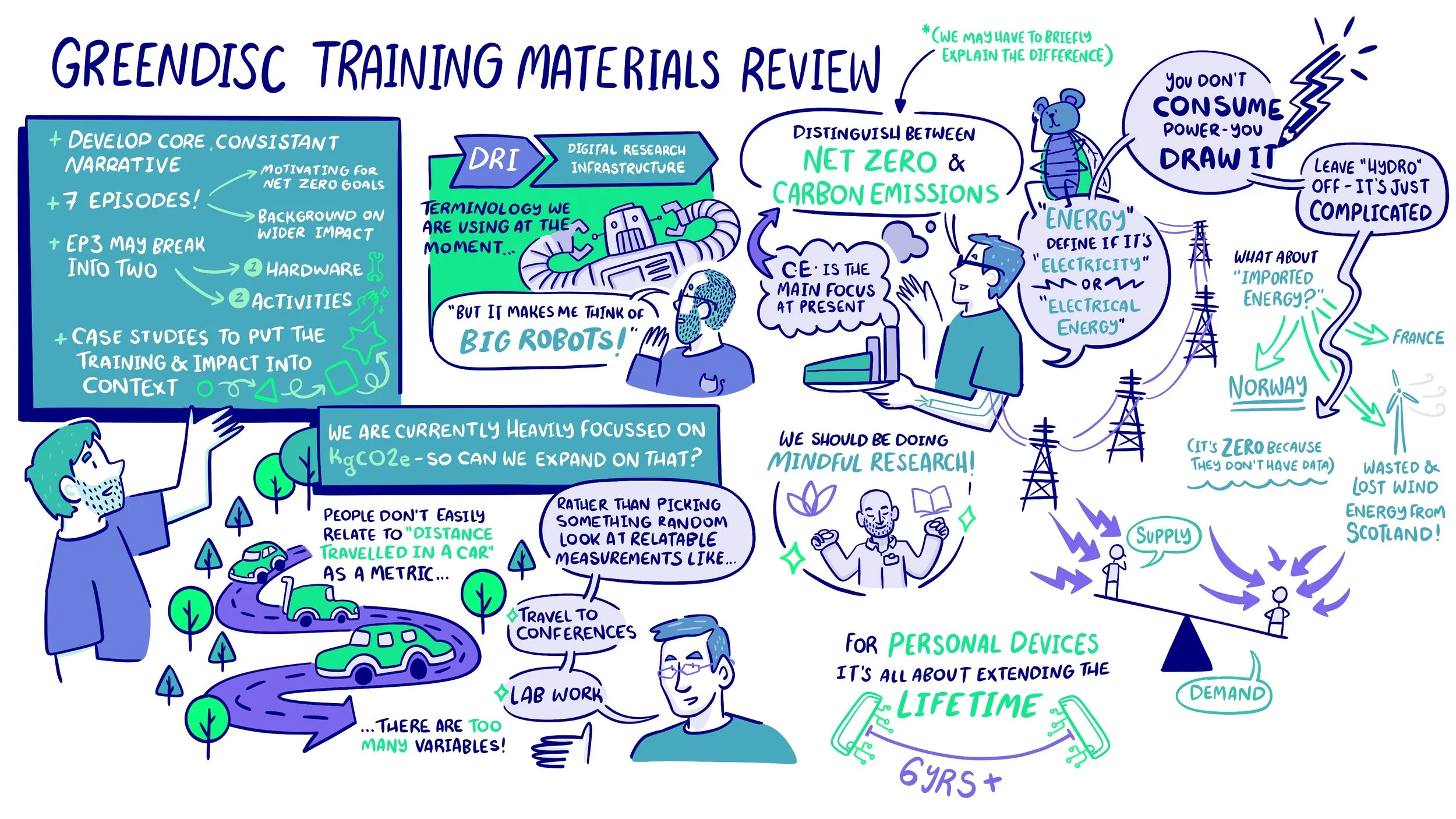

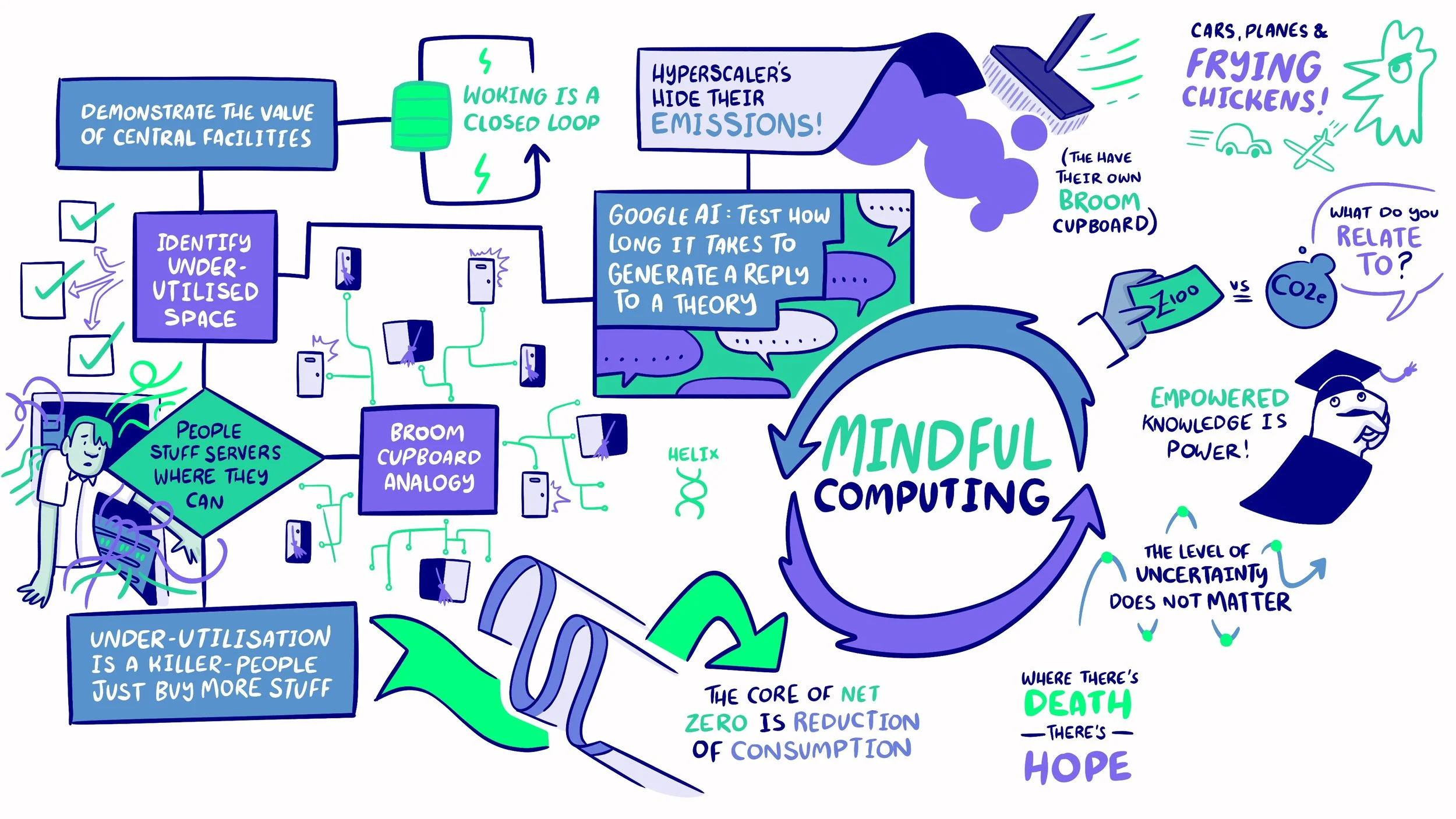
Imperial’s Sustainability team
Collaboration with the sustainability team led to a spin-off series of branded illustrations that feed into the Sustainable digital research culture training, promoting the 7 Steps to Imperial Sustainability. This collaboration is beneficial to both departments and allows for cross-pollination of branded illustrations that can be used in a side range of communication materials.


Posters for the Sustainability team

Presentations for the Sustainability team


The Imperial Brand Training Materials:
The main body of work was developing a set of green computing training materials released under an open license (CC-BY) to enhance awareness and practices around sustainable computing use.
This pivotal pilot will provide communication material to support activities and widen awareness and participation around GreenDisc Certification.
Our work was designed to support Imperial’s Net Zero ambitions through a set of accessible, engaging visual materials that align to the universities brand.
See more illustrations on the Imperial GitHub as the project develops.